
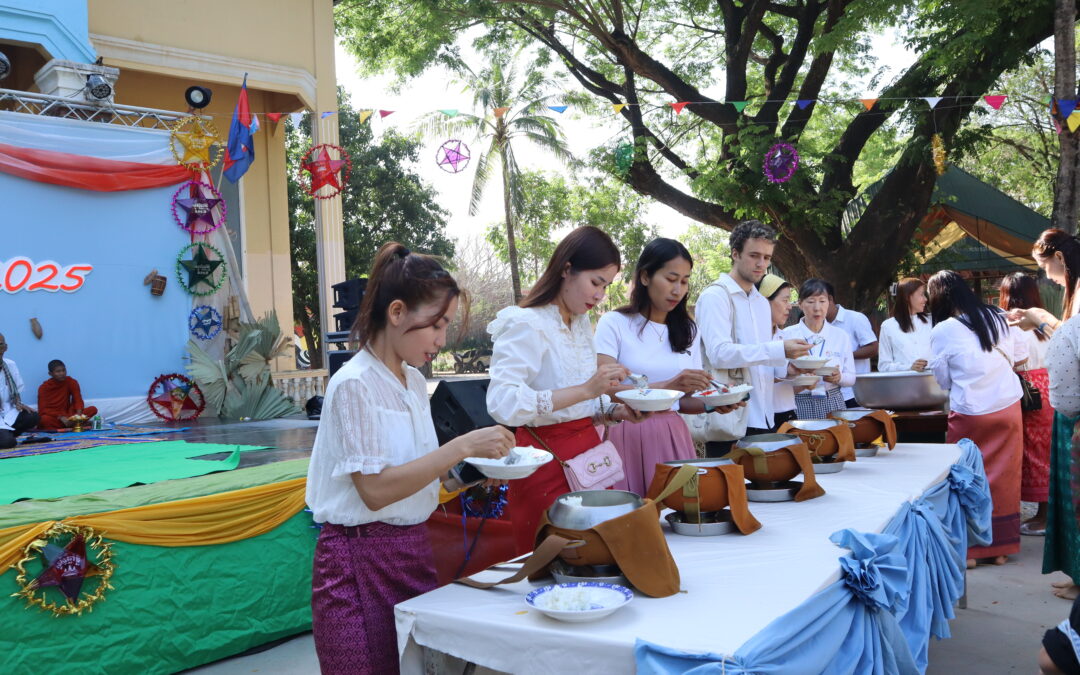
Every April, as the dry season reaches its peak, Battambang comes alive with color, sound, and shared celebration. Khmer New Year, known locally as Chaul Chnam Thmey, is one of Cambodia’s most important holidays, marking the turn of the traditional calendar and the end of the harvest season. For visitors, it is a rare opportunity to experience Cambodian culture through community traditions. In Battambang, Phare Ponleu Selpak makes the festivities feel especially vivid and welcoming, celebrating the creative expression of local artists.
What Is Khmer New Year?
Khmer New Year is celebrated over three days in mid-April and is closely tied to Buddhist beliefs, agricultural traditions, and family values. In 2026, Khmer New Year falls on April 14, 15, and 16. The holiday offers a moment of renewal, gratitude, and reconnection with loved ones. In preparation, homes are cleaned and decorated, pagodas become gathering places for prayer and blessing, and families reunite to welcome the year ahead together.
Each day of Chaul Chnam Thmey holds specific meaning and brings different traditions. The first day, Maha Songkran, focuses on welcoming the new year with preparation and spiritual intention. Families visit pagodas with offerings, receive blessings from monks, and set intentions for the months to come. The second day, Virak Vanabat, highlights generosity and togetherness, encouraging visits to relatives, gifts for elders, and acts of charity within the community. The final day, Vearak Loeng Sak, centers on forgiveness and renewal, symbolized by the pouring of scented water over Buddha statues (Srong Preah) and elders as a sign of respect, gratitude, and hope for health and longevity.
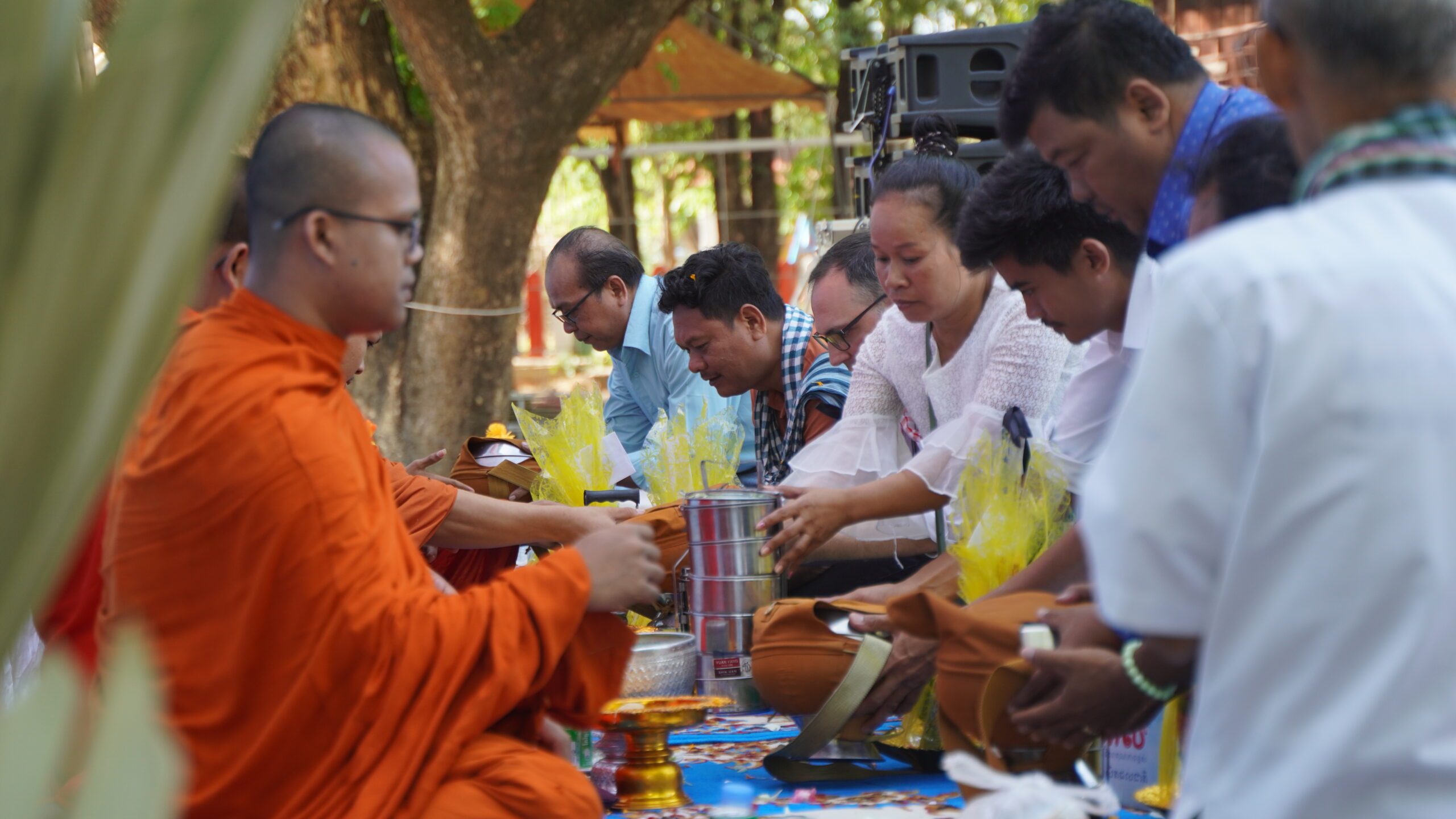
Photo credit: Supplied
Celebrating in Battambang
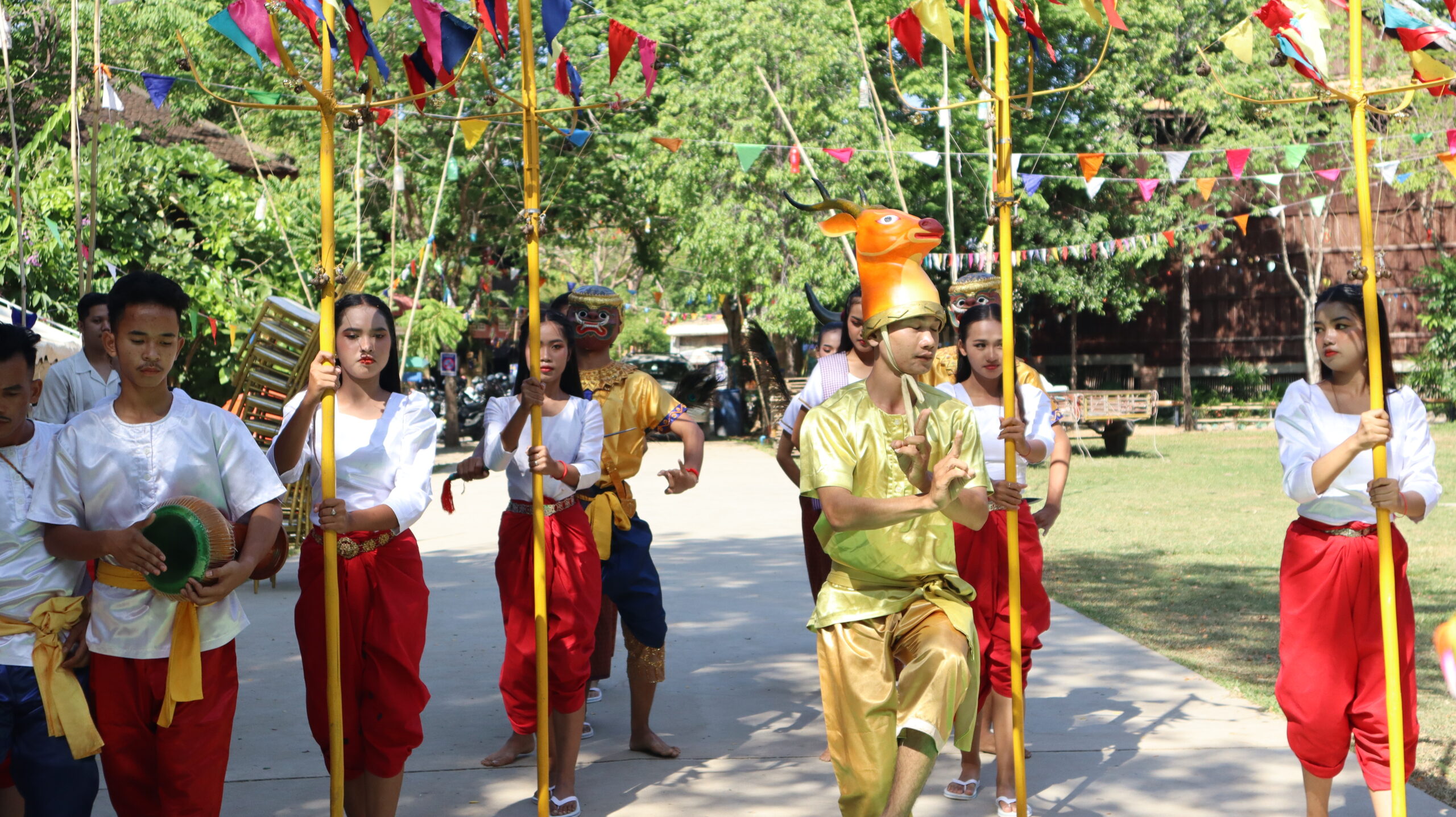
In Battambang, Khmer New Year is celebrated in markets, pagodas, and along the streets lining the Sangker River. Traditional games appear in public spaces, drawing laughter and friendly competition among neighbors and visitors alike. Popular games include Teanh Prot (similar to tug-of-war), Leak Kanseng (also known as scarf hiding), and Choul Chhoung. In 2015, Teanh Prot was added to UNESCO’s List of Intangible Cultural Heritage of Humanity!
Aside from games, music fills the air, food stalls multiply, and families gather outdoors to celebrate together. You might see some locals enjoying Romvong, a popular folk-dance where participants dance around in a circle. Don’t hesitate to join in!
Pagodas play a central role throughout the festival. If you find yourself in Battambang, Wat Damrey Sor (White Elephant Pagoda), Wat Keo (White Crocodile Pagoda), and Wat Samrong Knong are definitely worth visiting. Visiting the pagoda offers a chance to observe traditional rituals emphasizing cleansing, mindfulness, and respect. It is important to dress modestly and respect the local customs.
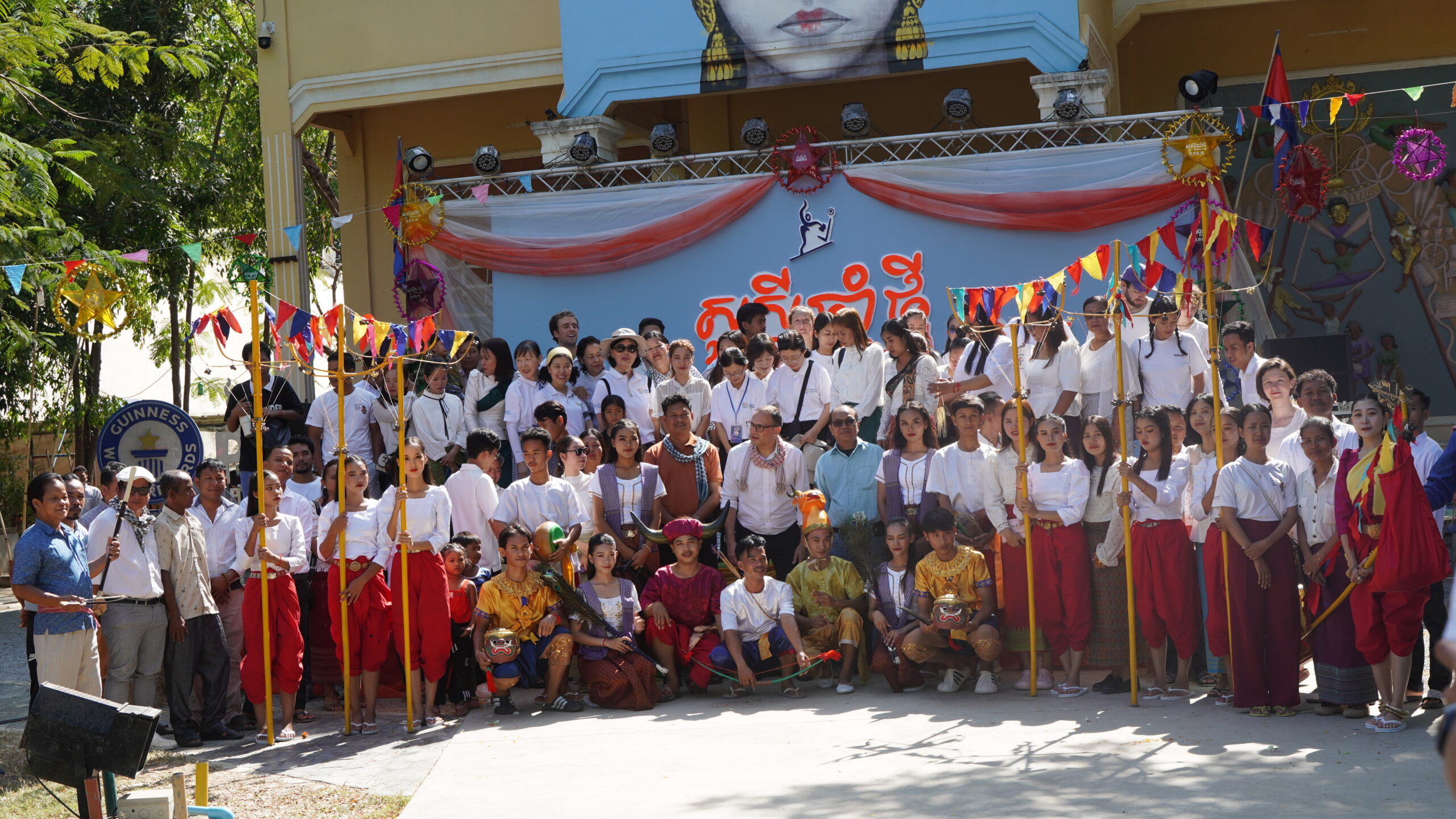
Photo credit: Rattanakoudom
Alongside these traditions, the city also embraces joyful modern festivities. Water and talcum powder, typically used for blessing, are used in playful street-wide celebrations that bring generations together. Water rituals on the third day (T'ngai Leang Sakk) hold particular significance in Battambang's close-knit communities as a sacred Buddhist purification practice. Family members gently pour scented water over elders’ hands and shoulders to ritually wash away the previous year’s misfortunes, sins, and negativity while invoking prosperity, longevity, and good fortune ahead. In Battambang, this intimate and respectful tradition reinforces familial piety and communal harmony, even as it inspires vibrant street celebrations that blend solemn blessings with playful water-splashing.
Public spaces and river crossings are carefully decorated, and neighborhoods feel united by shared purpose and pride. The surrounding landscape adds to the atmosphere. Rice fields resting after harvest and the slow curve of the Sangker River create a serene backdrop to the celebrations, reminding visitors of the close connection between the festival, the land, and seasonal life.
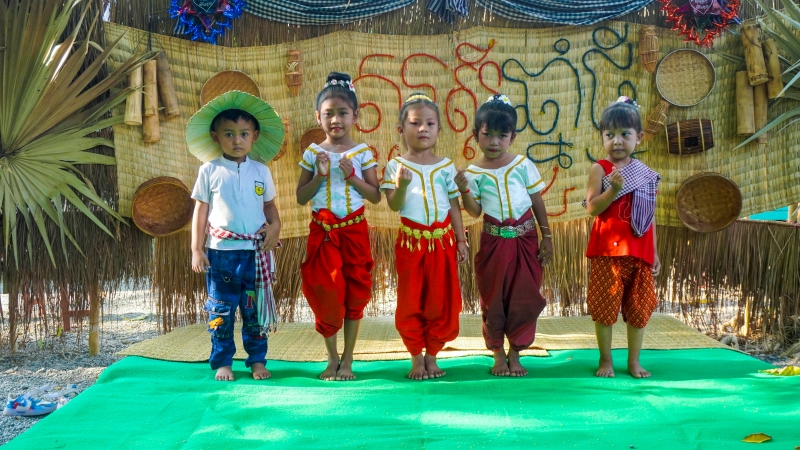
Photo credit: Supplied
At Phare Ponleu Selpak, students, teachers, and staff come together for collective activities that show care for shared spaces, cultural tradition, and creative expression. Traditional games, performances, and artistic showcases allow young creatives to celebrate their Khmer heritage. If you are visiting Cambodia in April, make sure to pay a visit to Battambang, which offers an authentic and enriching way to experience Khmer New Year. Battambang’s strong sense of local culture, combined with its welcoming and creative energy, make it the perfect place to join in on the celebration.
Join our mission to keep theatre and performing arts alive in Battambang—support Phare and empower young talents to rise.
***
Explore more blog posts related to: #CambodianCulture, #CambodiaTravel, #CelebrateCambodia, #ChaulChnamThmey, #KhmerCulture, #KhmerNewYear, #KhmerTraditions, #PharePonleuSelpak, #VisitBattambang, Battambang
Joshua Ford
Josh is a Fulbright scholar currently volunteering with the Communications Department at Phare Ponleu Selpak. As a recent university graduate studying foreign affairs and art history, Josh is passionate about harnessing the arts as a tool for cross-cultural connection.